
Presenting Clinical Research Results Effectively
San Antonio Breast Cancer Symposium
Learn how to effectively present clinical research results with Dr. George Sledge from Stanford University School of Medicine. This video covers essential aspects of scientific presentations, including types of talks, technical considerations, and potential pitfalls.
- Types of talks: short scientific, long, and job talks.
- Key elements of a short scientific presentation: title, introduction, methods, results, and discussion.
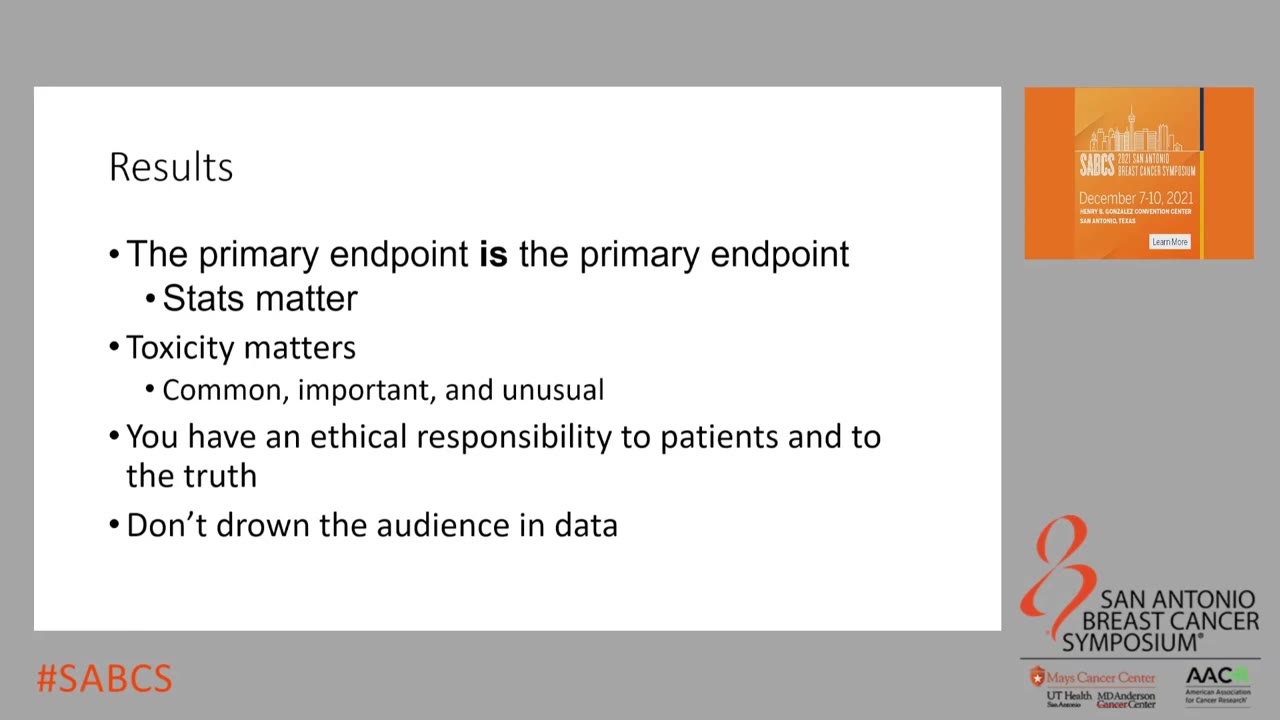
- Importance of focusing on primary endpoints and relevant toxicities.
- Ethical responsibilities in presenting clinical research.
Summary
Key Takeaways
- 1Titles should be concise and descriptive, not revealing the punch line; save the results for the results section.
- 2Focus introductory slides on the main problem or question addressed by the study to engage the audience quickly.
- 3Prioritize presenting the primary endpoint clearly, as statistical significance is typically based on this.
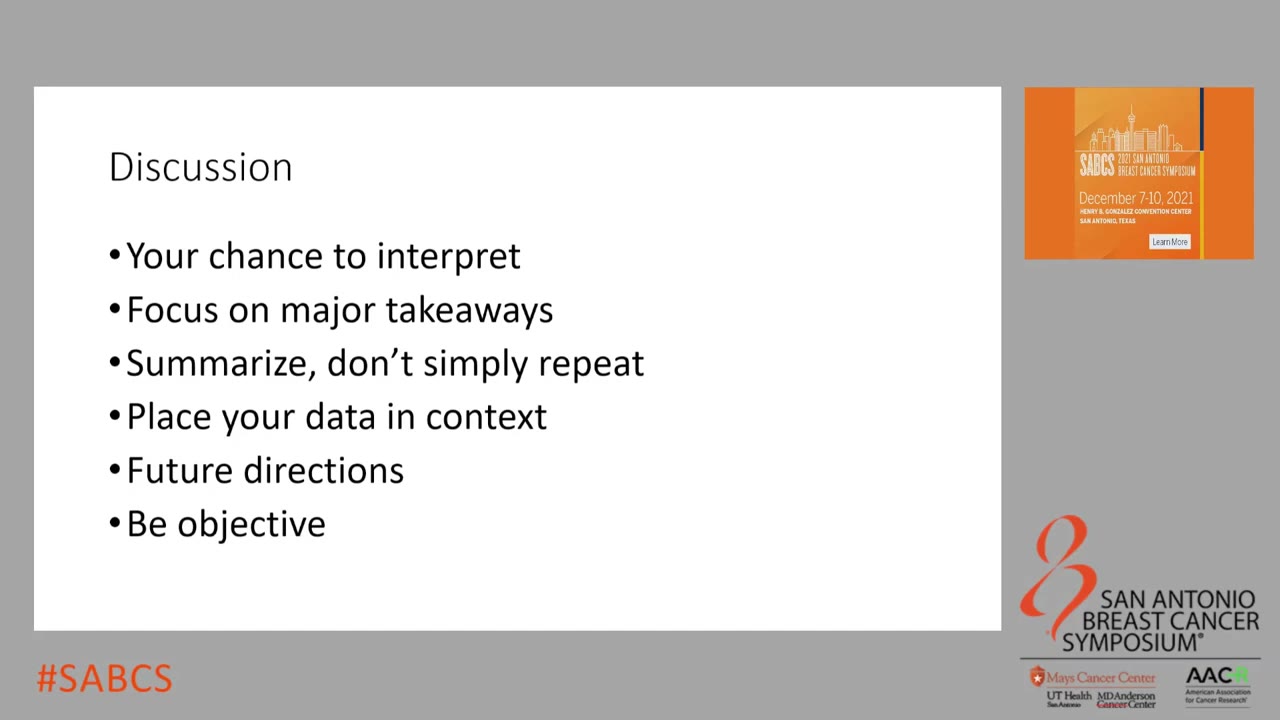
- 4In the discussion, summarize key takeaways and place the data in the broader context of existing research.
- 5Avoid arrogance or defensiveness during the Q&A session; be prepared to say 'I don't know' if necessary.
- 6For long talks, create a story arc that provides the history, current status, and future directions of the field.
- 7Job talks are about selling yourself; demonstrate domain mastery, creativity, productivity, and the ability to think on your feet.
Walk through
Slide Contents
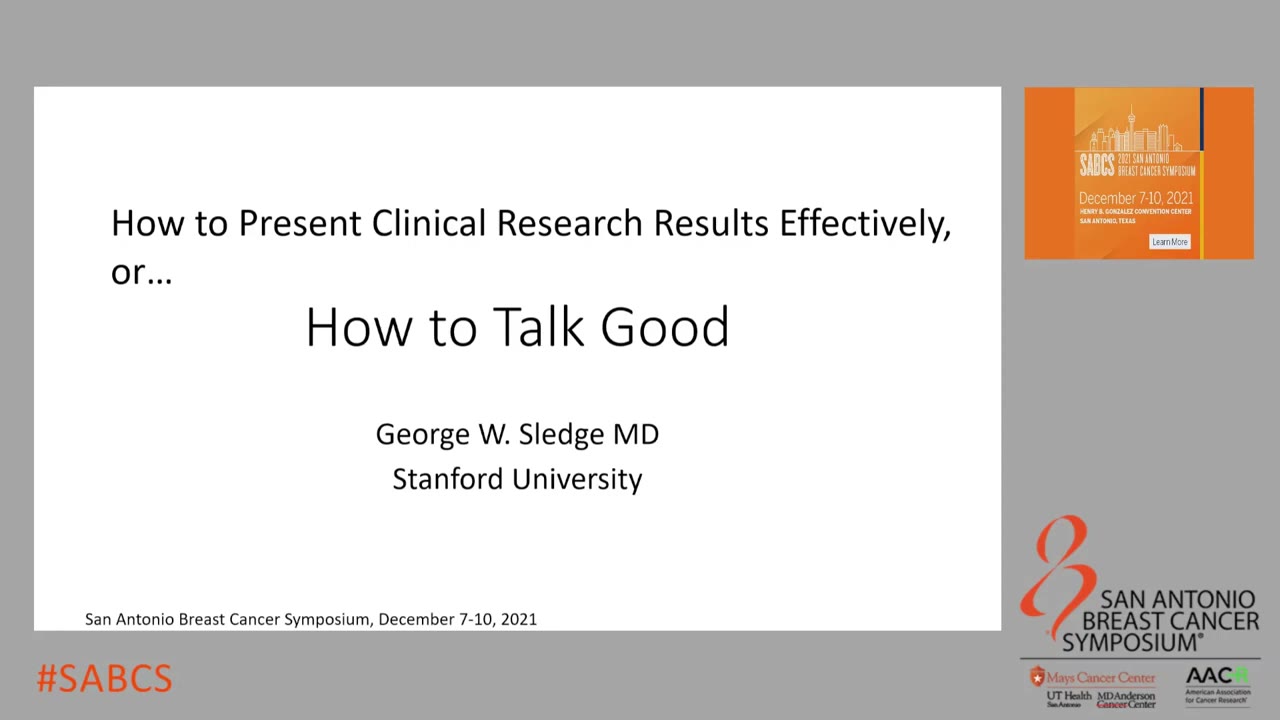
Dr. George Sledge from Stanford University School of Medicine will present on how to present clinical research results effectively.
The presentation will cover three types of talks: short scientific presentations (e.g., at San Antonio), long talks, and job talks. The primary focus will be on short scientific presentations.
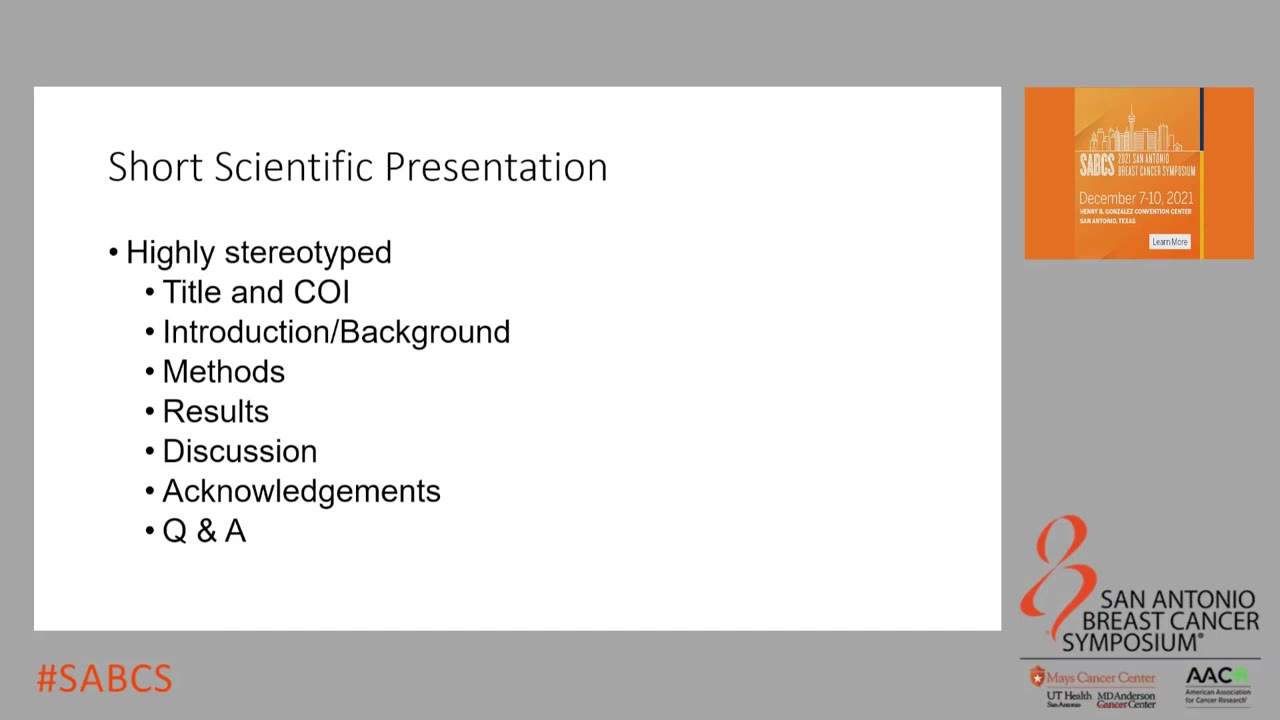
This presentation type follows a highly stereotyped structure: title/conflict of interest, introduction/background, methods, results, discussion, acknowledgments, and Q&A. The structured format limits degrees of freedom compared to other talk types.
Titles should be short and descriptive, not revealing the study's results. Ensure co-author names are spelled correctly. Take conflict of interest statements seriously and over-report if unsure.
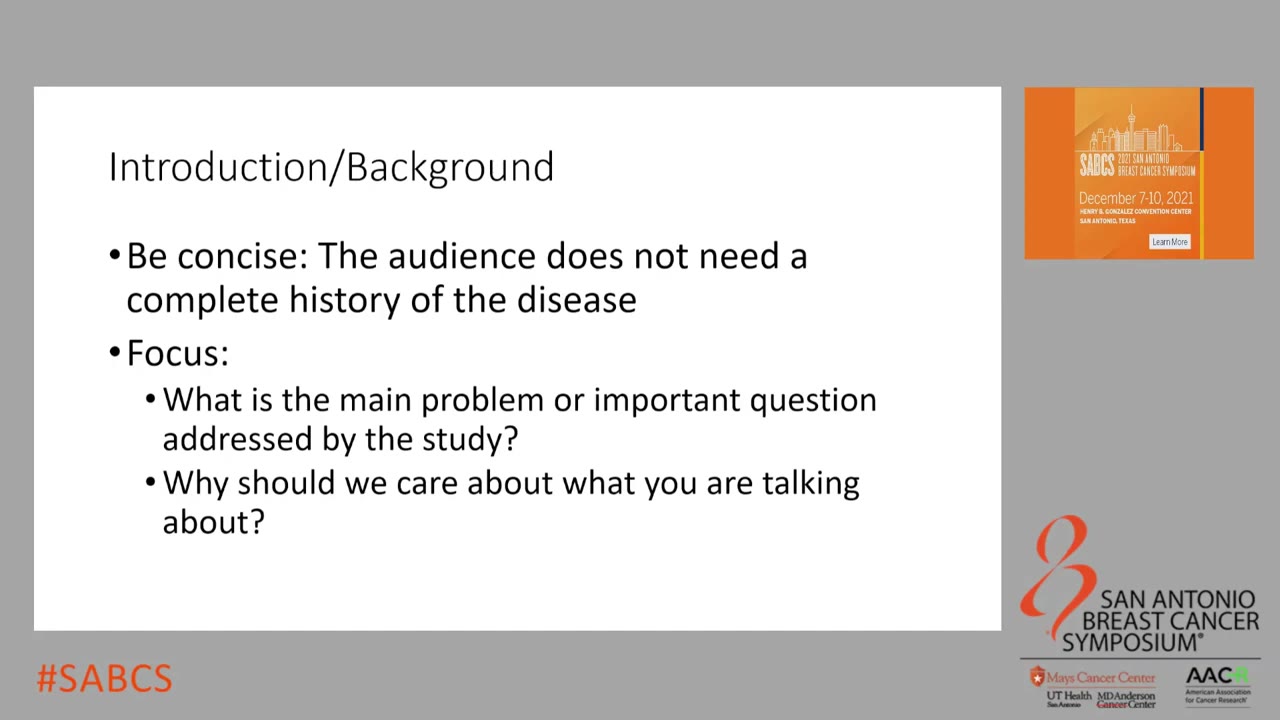
Be concise in the introduction. Focus on the main problem or question addressed by the study, explaining why the audience should care. Avoid stating obvious facts about the disease.
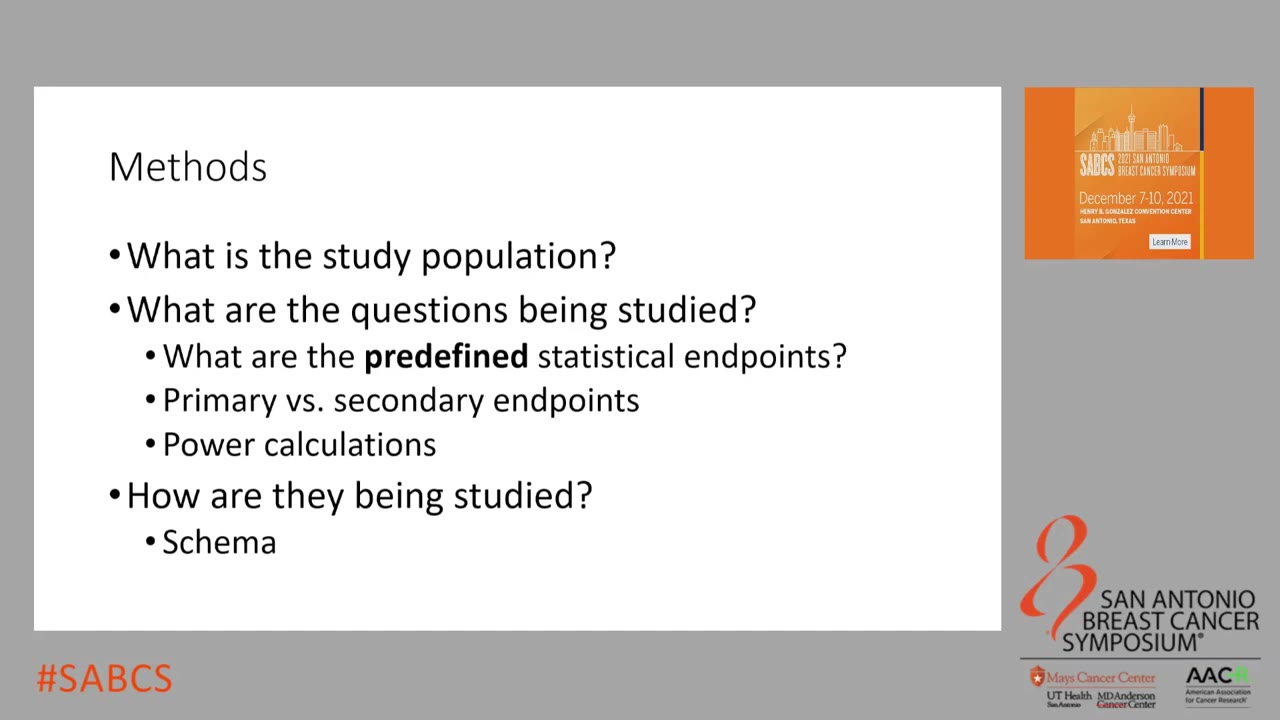
Describe the study population, inclusion/exclusion criteria, research questions, and predefined statistical endpoints (primary vs. secondary). Include power calculations and statistical methods. Use a clear patient flow schema.
Related Resources

Intro to Epidemiology: Origins & Triumphs
Axis Lab

COVID-19: What We Think We Know
Axis Lab

Cancer Metabolism: From Molecules to Medicine
Axis Lab

Cardiovascular Research Training Program at UNM
Axis Lab

Tissue Gnostics: Lymphoid Structures & Cancer
Axis Lab

Minamata Convention & Health Sector: Mercury-Added Products
Axis Lab