Computer Vision & Deep Learning Intro
Axis Lab
This video introduces computer vision and deep learning, exploring their intersection and interdisciplinary nature. Professor Fei-Fei Li discusses the history of vision from the Cambrian explosion to modern AI applications.
Key highlights:
- The role of vision in the evolution of intelligence.
- The impact of neuroscience on computer vision modeling.
- The hierarchical structure of visual pathways.
- The intersection of computer vision with other fields like NLP and robotics.
内容摘要
核心要点
- 1Computer vision is a core component of AI, with its roots tracing back to the evolution of vision in animals and the development of visual intelligence.
- 2Deep learning, a subset of machine learning, has revolutionized computer vision through algorithms like neural networks and techniques like backpropagation.
- 3The history of computer vision is marked by key milestones, including neuroscience discoveries, early AI projects, and the development of foundational algorithms.
- 4Data plays a crucial role in training high-capacity deep learning models, as demonstrated by the impact of the ImageNet dataset and challenge.
- 5The convergence of computation, algorithms, and data has fueled the rapid advancement of AI, leading to breakthroughs in various applications of computer vision.
- 6Computer vision is an interdisciplinary field with applications in diverse areas such as robotics, medicine, sustainability, and generative AI.
- 7The field has progressed from basic image processing to complex tasks like object recognition, image segmentation, and video analysis, driven by advancements in algorithms and hardware.
演示预览
幻灯片内容
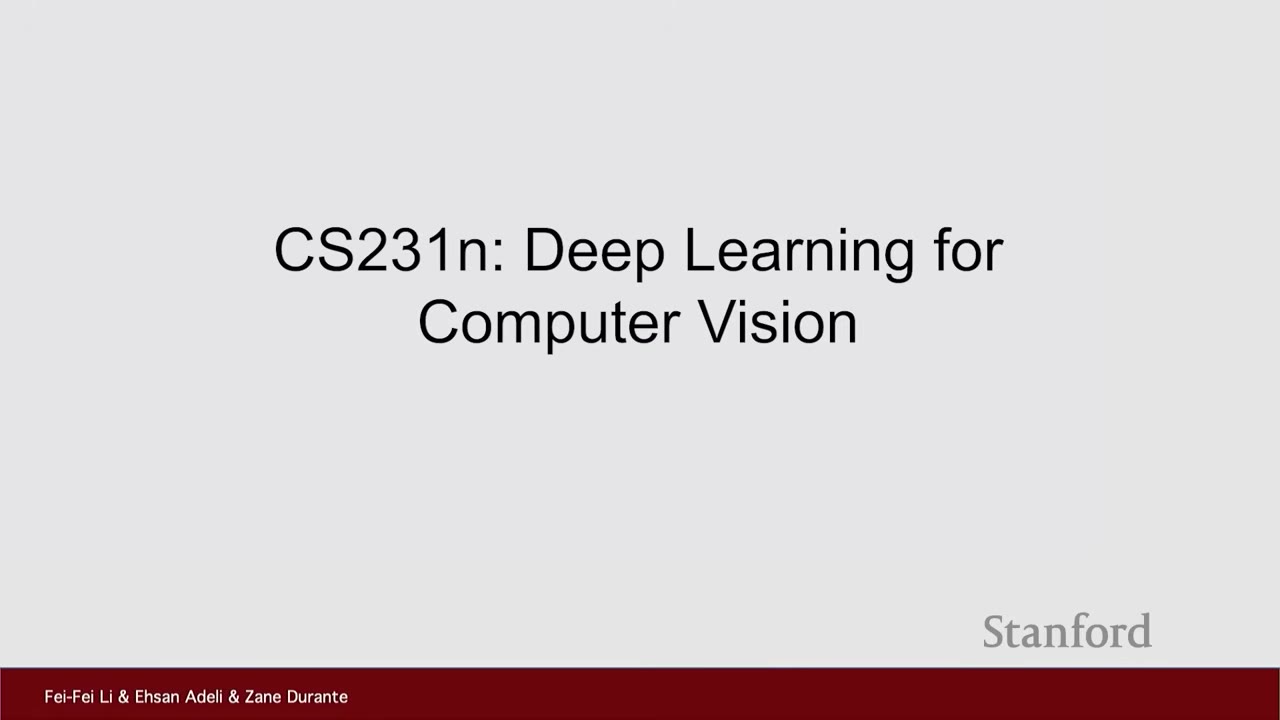
Professor Fei-Fei Li introduces the CS231n course, emphasizing the interdisciplinary nature of AI and encouraging students to apply computer vision and deep learning techniques to their respective fields of interest. The course will cover the core intersection of computer vision and deep learning, acknowledging the broader context of AI and its connections to various disciplines.
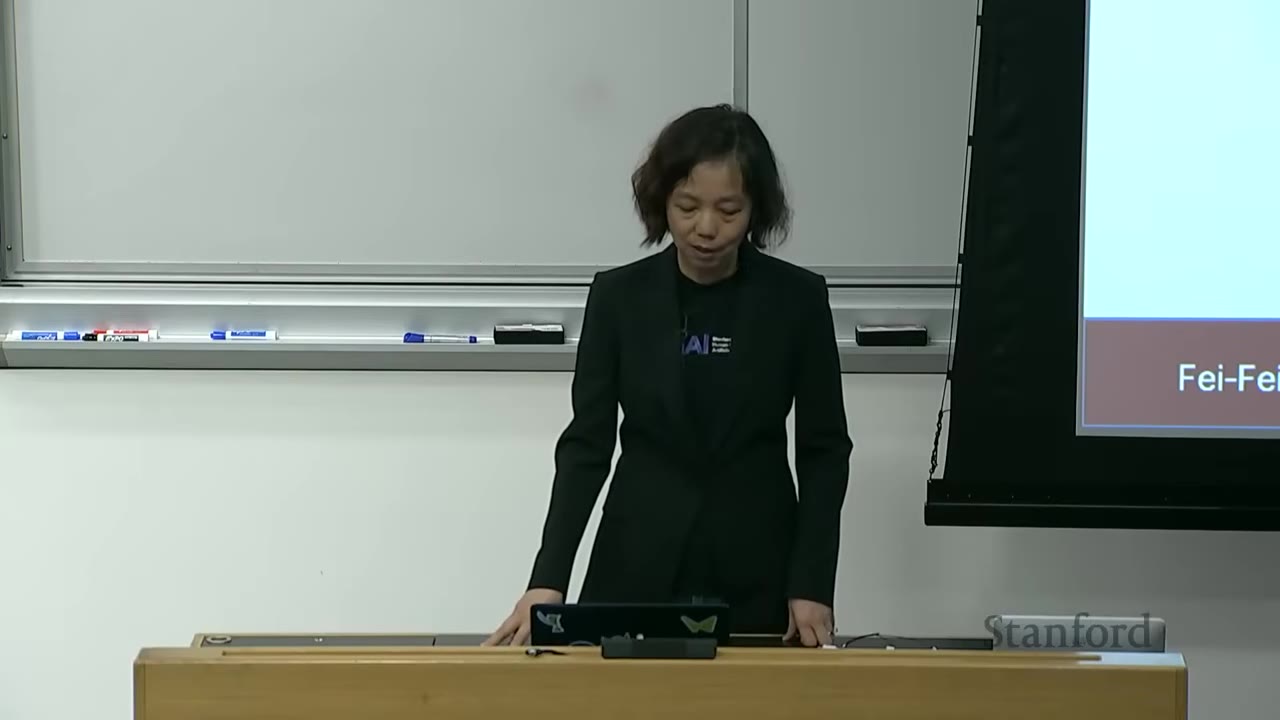
The lecture positions computer vision as an integral part of AI, highlighting its significance as a cornerstone of intelligence. It explains the relationship between AI, machine learning, and deep learning, emphasizing that the course will focus on the intersection of computer vision and deep learning. The interdisciplinary nature of computer vision is underscored, with connections to fields like NLP, robotics, mathematics, neuroscience, and various application areas.
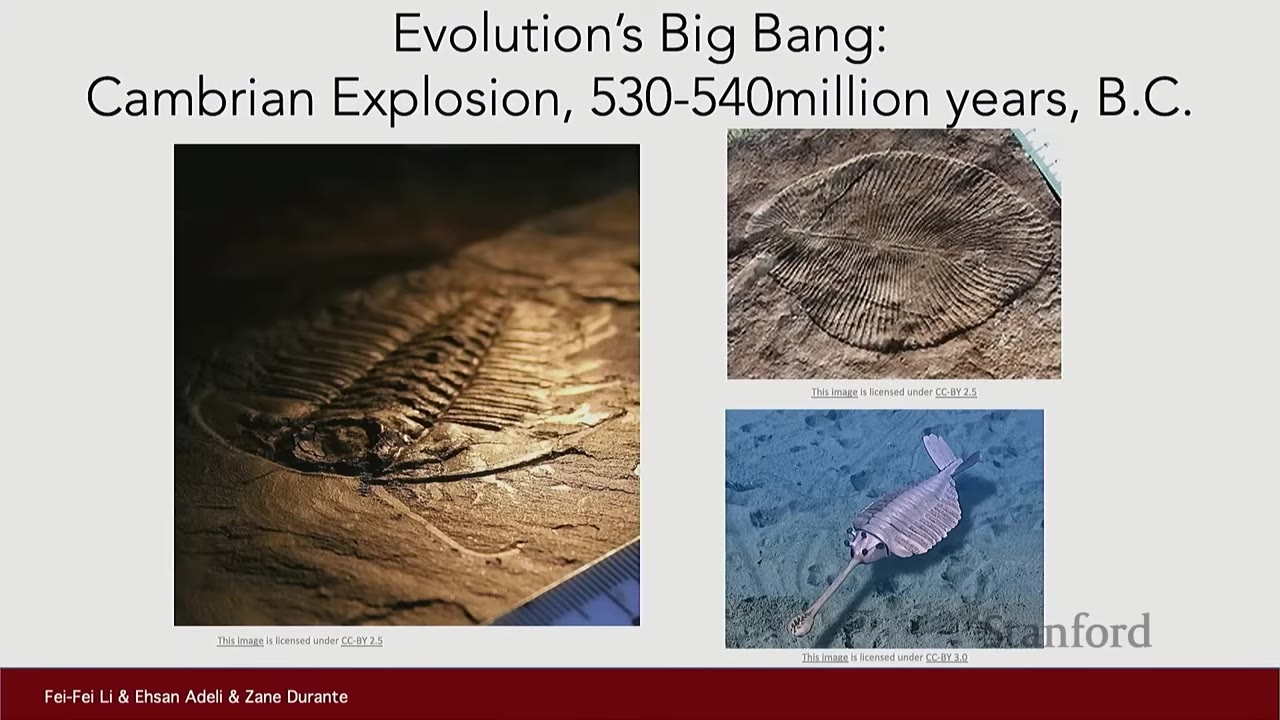
The lecture provides an overview of the topics to be covered, including a brief history of computer vision and deep learning. Professor Adeli will then discuss the course structure and expectations. The historical perspective begins with the Cambrian explosion, marking the onset of vision and its impact on the evolution of intelligence.
The Cambrian explosion, approximately 540 million years ago, is highlighted as a pivotal moment in the history of vision. The emergence of photosensitive cells in early animals, such as trilobites, led to the development of vision and the evolution of intelligence. This marked a transition from passive metabolism to active interaction with the environment, driving the development of nervous systems.
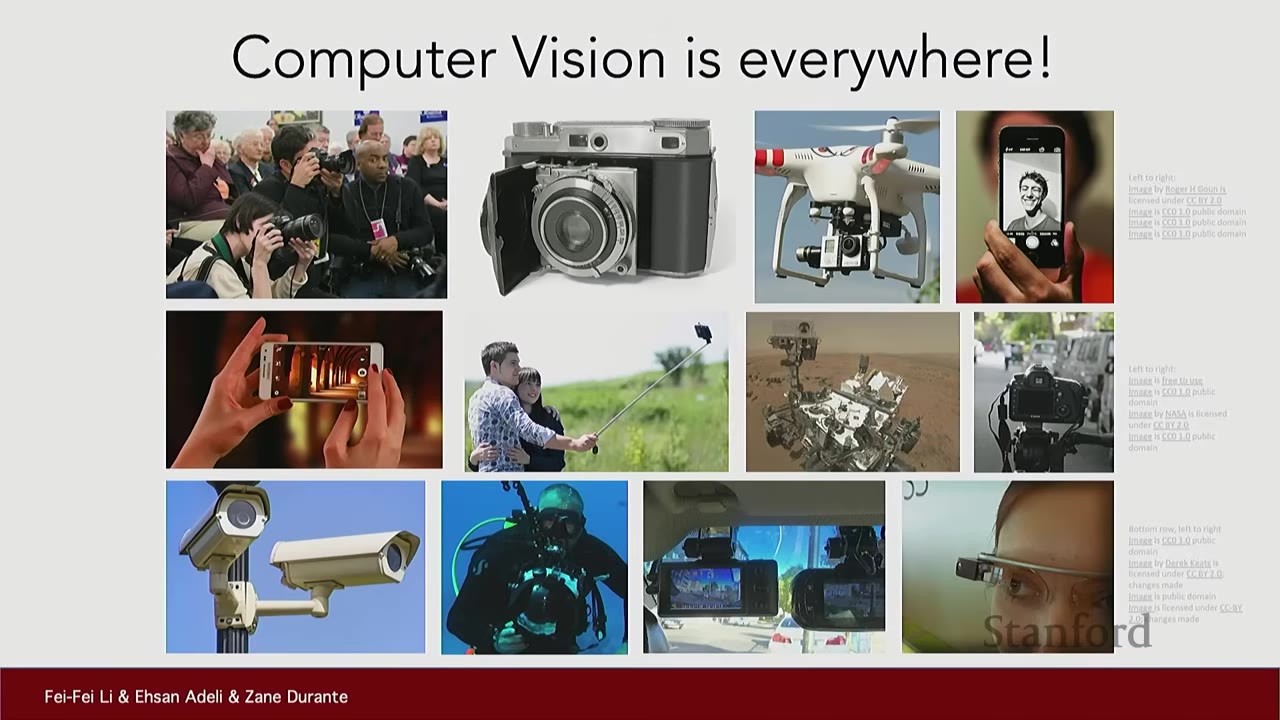
The lecture transitions from the Cambrian explosion to human civilization, emphasizing the human desire to build machines that see. Drawings by Leonardo da Vinci and historical accounts from ancient Greece and China illustrate early explorations of optics and image projection. The importance of understanding visual intelligence beyond mere apparatus like cameras is emphasized.
The lecture delves into the history of computer vision, starting with seminal neuroscience experiments in the 1950s. The work of Hubel and Wiesel on the visual pathways of mammals is discussed, highlighting the discovery of receptive fields and the hierarchical structure of the visual cortex. These findings had a profound impact on the development of neural network models for visual algorithms.