
Healthcare Compliance Guidance Update: OIG Insights
Harris Sliwoski
This video discusses the new healthcare compliance guidance released by the Office of Inspector General (OIG), a significant update since the 1990s. Experts delve into fraud and abuse laws, compliance plans, and mitigation strategies.
Key highlights:
- Understanding the Anti-Kickback Statute and Stark Law.
- Navigating False Claims Act implications.
- Mitigating risk with effective compliance programs.
- The seven elements of a compliance plan.
- The importance of written policies and procedures.
内容摘要
核心要点
- 1Healthcare compliance is rooted in federal fraud and abuse laws, including the Anti-Kickback Statute, Stark Law, and False Claims Act.
- 2An effective compliance program is not a one-size-fits-all solution; it must be tailored to the organization's size, scope, and specific risks.
- 3The seven elements of a compliance program provide a framework for developing and implementing comprehensive compliance measures.
- 4Leadership oversight and commitment are crucial for fostering a culture of ethics and compliance within the organization.
- 5Training and education should be targeted to specific roles and risks, ensuring that all relevant individuals understand their responsibilities.
- 6Open communication, non-retaliation policies, and accessible reporting mechanisms are essential for identifying and addressing compliance concerns.
- 7The OIG's updated guidance emphasizes the integration of quality and patient safety requirements into compliance programs.
演示预览
幻灯片内容
Ethan Minkin introduces the topic of updated healthcare compliance guidance from the Office of Inspector General (OIG). The update is the first major revision since the 1990s, with expectations for more specific guidance for various industry participants in the future, including Medicare Advantage plans and nursing homes. Shireen and Amba are introduced as guest speakers.
The agenda includes a brief overview of fraud and abuse laws, compliance plans, and mitigation strategies. Each of these topics could be explored in much greater depth, but the presentation will provide a concise overview.
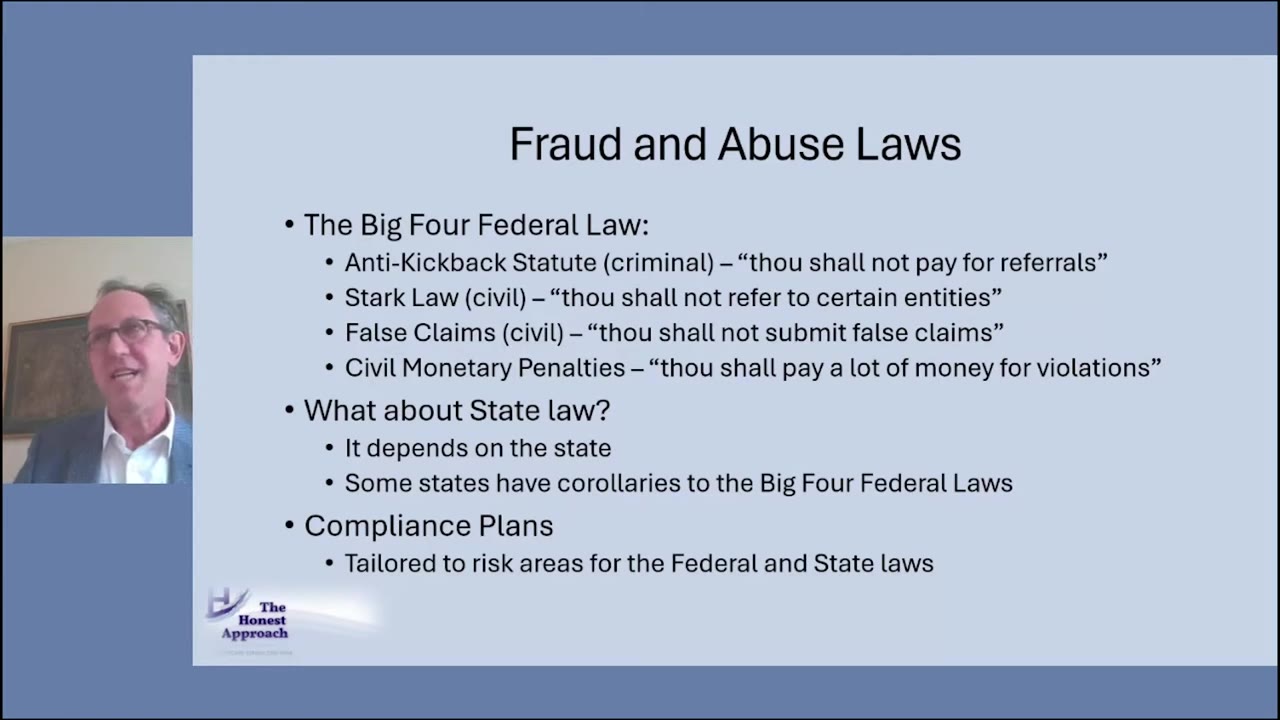
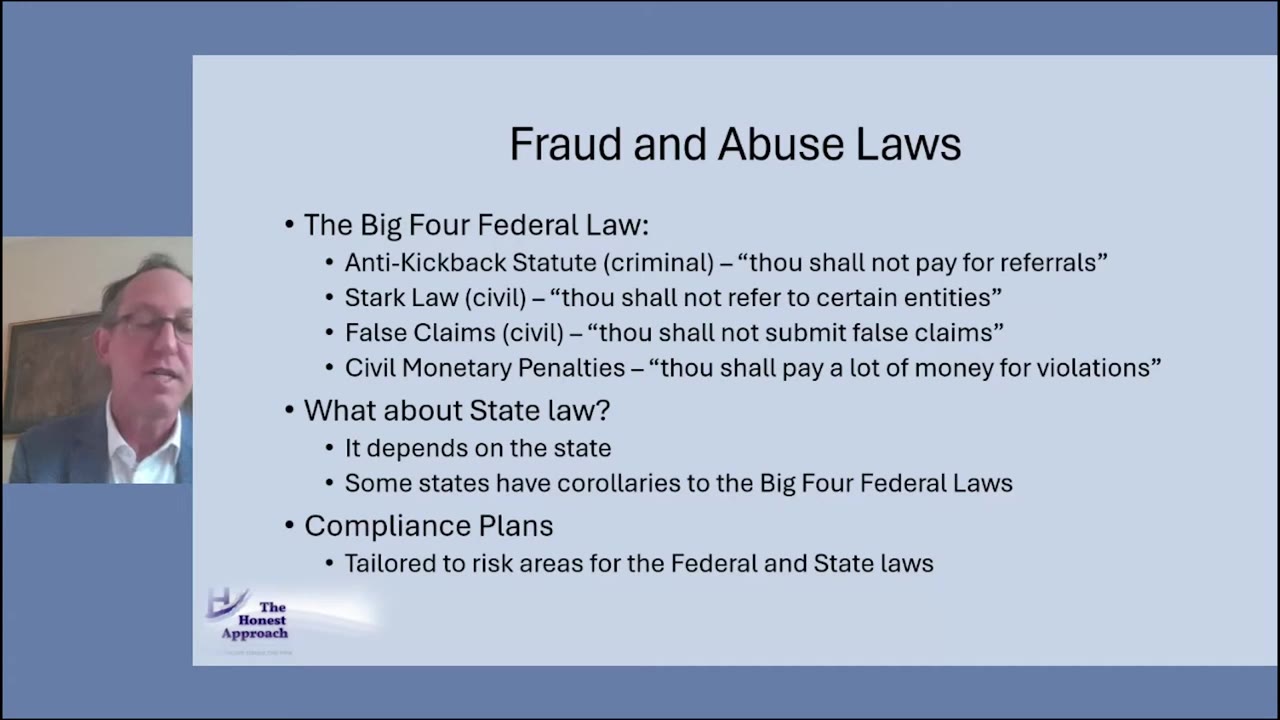
The Anti-Kickback Statute prohibits paying for referrals and includes various forms of remuneration. The Stark Law restricts physician referrals to entities in which they have a financial interest. The False Claims Act prevents submitting claims for services not rendered or medically unnecessary. Civil Monetary Penalties impose financial penalties for violations of these laws. State laws also play a role and should be considered in compliance plans.
Mitigation of risk is a key theme in the OIG's guidance. The slide highlights a reference to the legal implications for mitigation within the 90-page document.
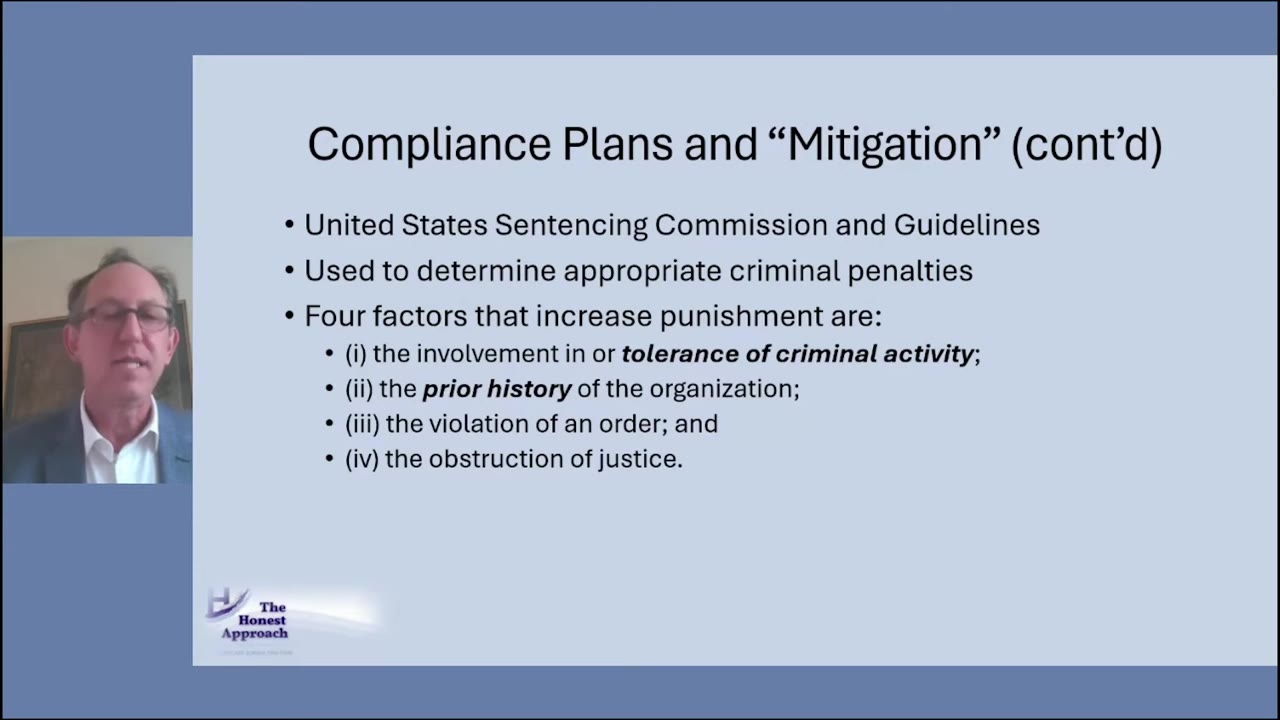
The United States Sentencing Commission guidelines are used by federal judges to determine criminal penalties. Penalties can increase with aggravating circumstances, such as involvement in criminal activity or a history of violations. A compliance plan can help alleviate these issues.
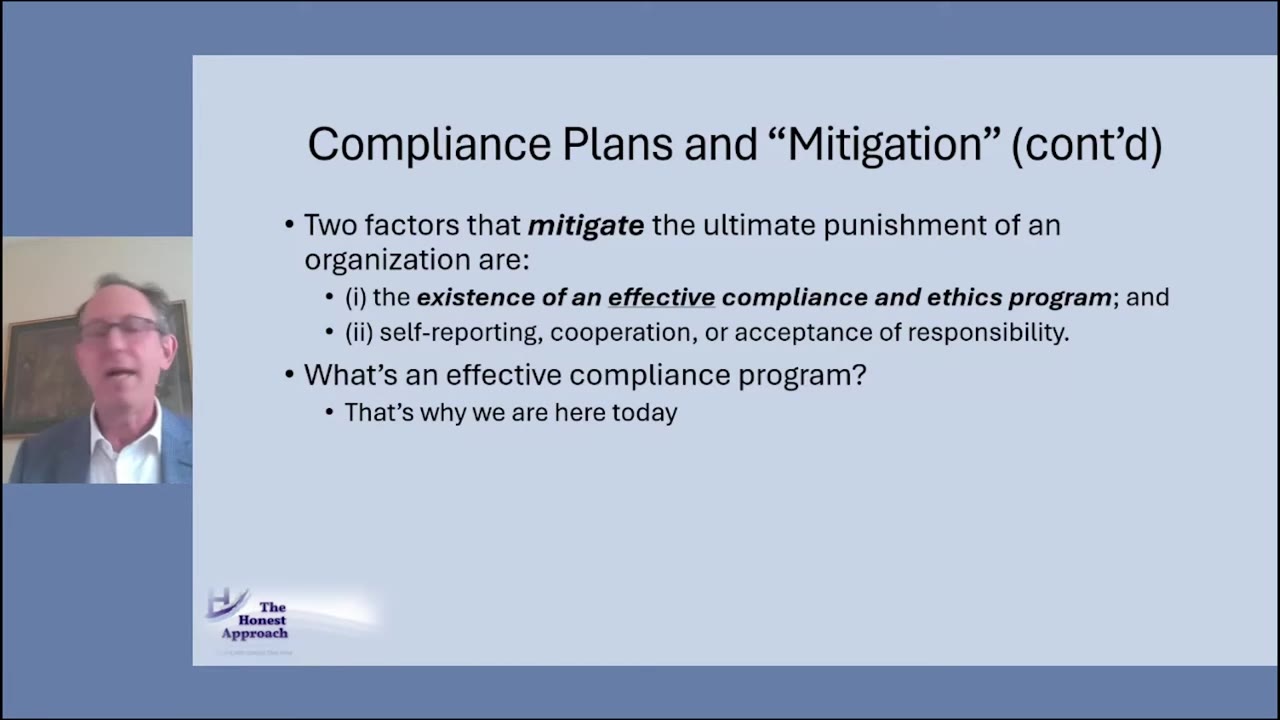
The existence of an effective compliance and ethics program is a key factor in mitigating potential penalties. The program must be more than just a document on a bookshelf; it must be actively implemented and enforced.