AI's Impact on Healthcare: A Personal Perspective
Stanford Online
This video explores the growing role of AI in healthcare, from personal use to large-scale transformations. Featuring insights from a former McKinsey consultant and current Chief AI Transformation Officer, it examines how AI is changing patient care and the healthcare system.
Key Highlights:
- AI's increasing role in personal healthcare decisions.
- The potential for AI to address physician shortages and improve access to care.
- The shift towards AI-driven care management and preventative care.
- Consumer adoption of AI as a primary healthcare resource.
- The future of AI as a "quarterback" of care, working alongside physicians.
内容摘要
核心要点
- 1AI is significantly reducing the need for personal consultations with specialists, leading to increased efficiency in healthcare management.
- 2Consumer comfort with AI in healthcare is rapidly increasing, indicating a growing acceptance of AI as a tool for managing personal health.
- 3AI has the potential to address clinician shortages by automating administrative tasks and enabling more efficient care management.
- 4The healthcare industry is shifting towards proactive and preventive care, with AI playing a key role in enabling personalized interventions and continuous monitoring.
- 5Policy changes are needed to guide the responsible adoption of AI in clinical settings, particularly regarding patient safety and data privacy.
- 6AI is expected to drive deflationary forces in healthcare by reducing administrative costs and improving operational efficiency.
- 7Empowered patients and physicians are leveraging AI to drive changes in traditional healthcare incentives, leading to a more patient-centric approach.
演示预览
幻灯片内容

Dr. Syed Mohiuddin, Chief AI Transformation and Strategy Officer at UnitedHealth Group, joins the Stanford AI Health Podcast to discuss AI's impact on healthcare. The conversation begins with a personal perspective on how AI tools have changed the way healthcare is managed.
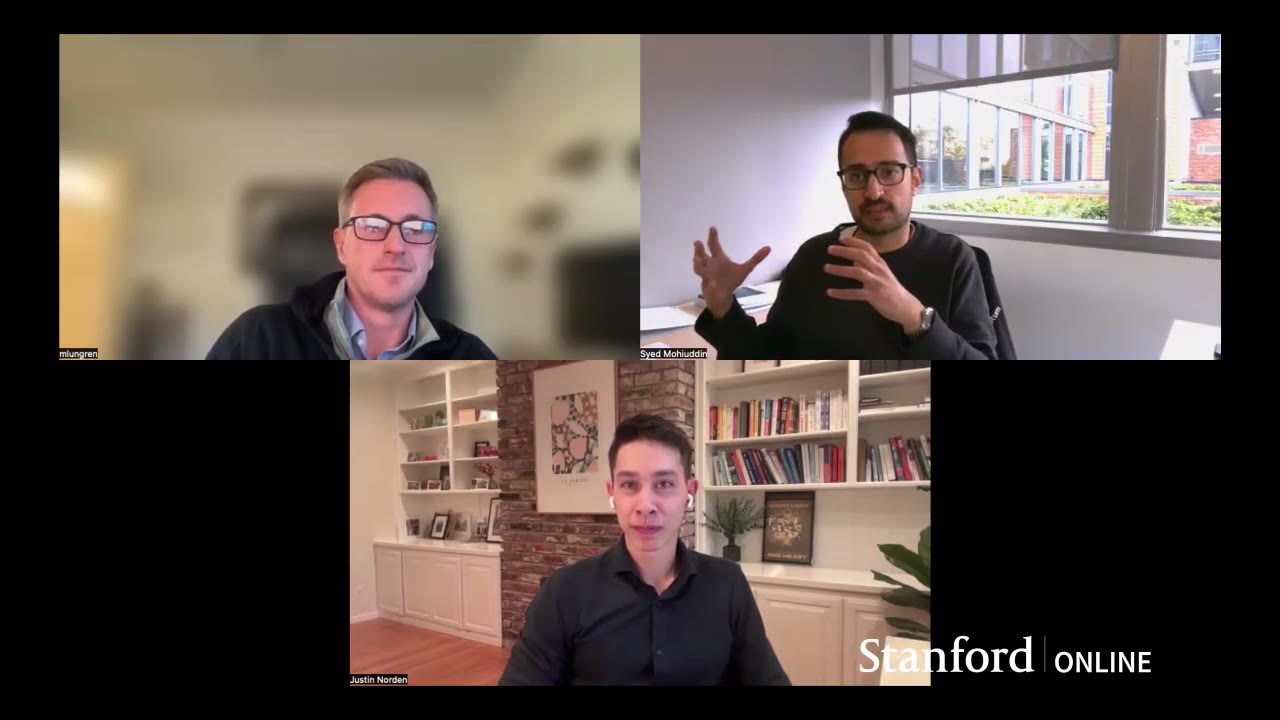
Dr. Mohiuddin shares that AI has significantly reduced his need to consult with specialists for personal health matters, estimating a 50% reduction in outreach. He quantifies this as a 10-20x productivity gain, highlighting the efficiency AI brings to healthcare decision-making.

The speakers discuss how AI enables them to conduct preliminary research and gather information before consulting with colleagues, leading to more informed and efficient discussions. This 'shotgun pass' approach allows for a more targeted and productive use of specialist expertise.
Dr. Mohiuddin recounts an instance where AI could not identify the most suitable specialist for a rare cancer case, necessitating a direct call to a leading expert. This illustrates the current limitations of AI in handling highly specialized and nuanced medical situations.
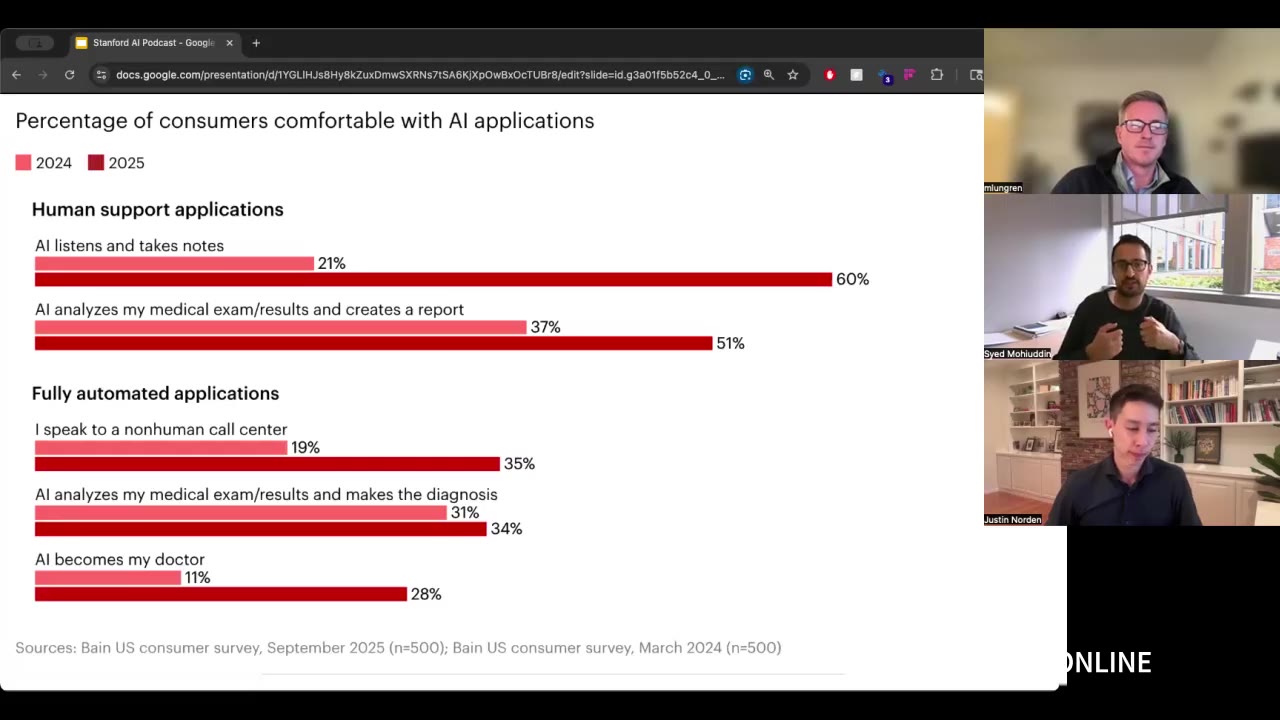
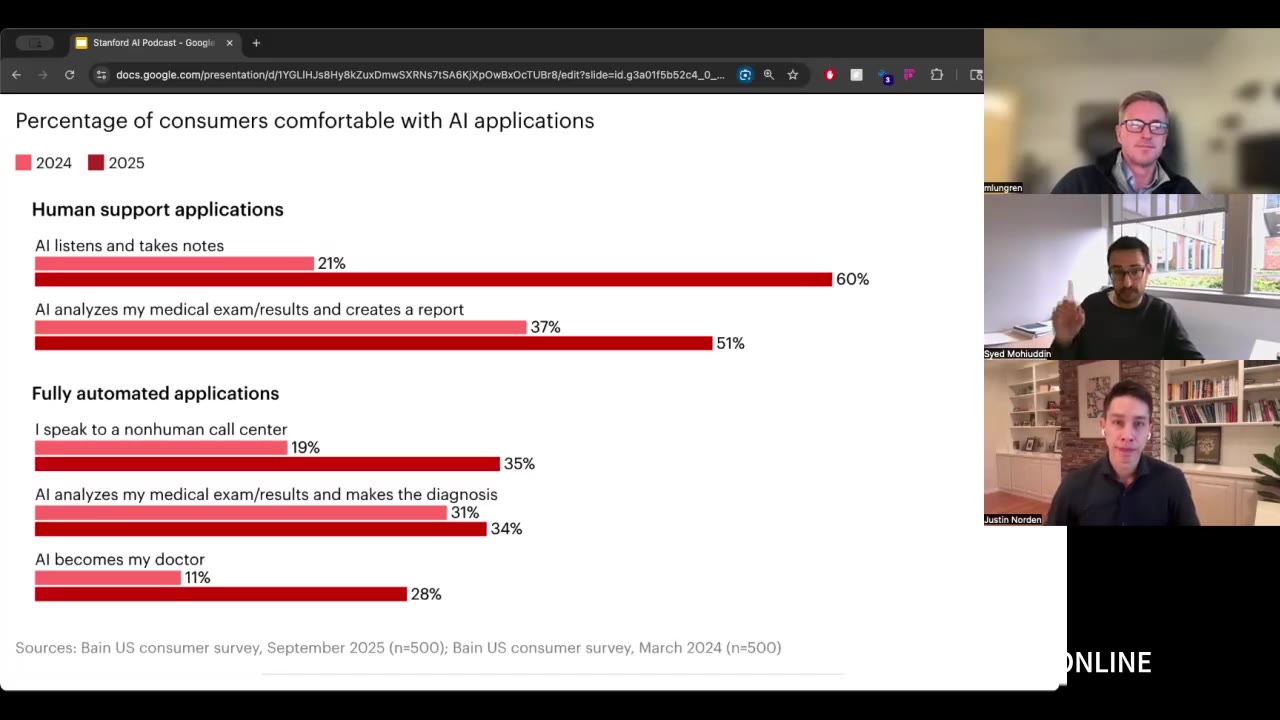
A Bain survey indicates a significant increase in consumer comfort with AI as a doctor, rising from 11% in 2024 to almost 30% in 2025. This trend suggests a growing acceptance of AI as a healthcare provider and raises questions about the future of the healthcare system.

The increasing consumer comfort with AI is attributed to a combination of headwinds, such as clinician shortages and impersonalized care, and tailwinds, such as the convenience and accessibility of AI-powered information. Millions of users are submitting clinical queries to AI applications, indicating a widespread adoption of AI for healthcare information.