AI in Healthcare: Real-World Use Cases
Stanford Online
This video analyzes real-world applications of AI in healthcare, based on data from OpenAI and other sources. Experts discuss how AI is being used for writing, information seeking, and even creating fake medical content.
Key highlights:
- AI's role in healthcare communication and content creation.
- The increasing sophistication (and potential pitfalls) of AI-generated content.
- The democratization of AI tools and their impact on cost and accessibility.
- Concerns about AI-generated misinformation and fake medical professionals.
内容摘要
核心要点
- 1AI is increasingly being used by consumers for health-related information, indicating a growing need for practical guidance and reliable resources.
- 2The cost of AI capabilities is decreasing, leading to greater democratization and access to these technologies, which can potentially address healthcare disparities.
- 3Alert fatigue and workflow integration challenges can hinder the effective use of AI-driven clinical decision support systems, necessitating careful design and implementation.
- 4Real-world monitoring and evaluation are crucial for assessing the performance and impact of AI tools in diverse clinical settings, especially considering the rapid pace of technological change.
- 5Establishing robust data infrastructure, including unique identifiers and standardized data collection methods, is essential for enabling effective real-world evidence generation and analysis.
- 6Collaboration between healthcare professionals, AI developers, and regulatory bodies is vital for ensuring the safe and effective deployment of AI in healthcare.
- 7A shift in perspective is needed to focus on the potential benefits of AI in addressing existing healthcare challenges, such as medical errors and lack of access, rather than solely focusing on the risks.
演示预览
幻灯片内容

OpenAI's data reveals that 5-10% of ChatGPT conversations are health-related, indicating significant consumer interest. Common uses include seeking information and writing. In the work setting, writing is also a prominent application. This highlights the increasing integration of AI tools into everyday activities and professional tasks.
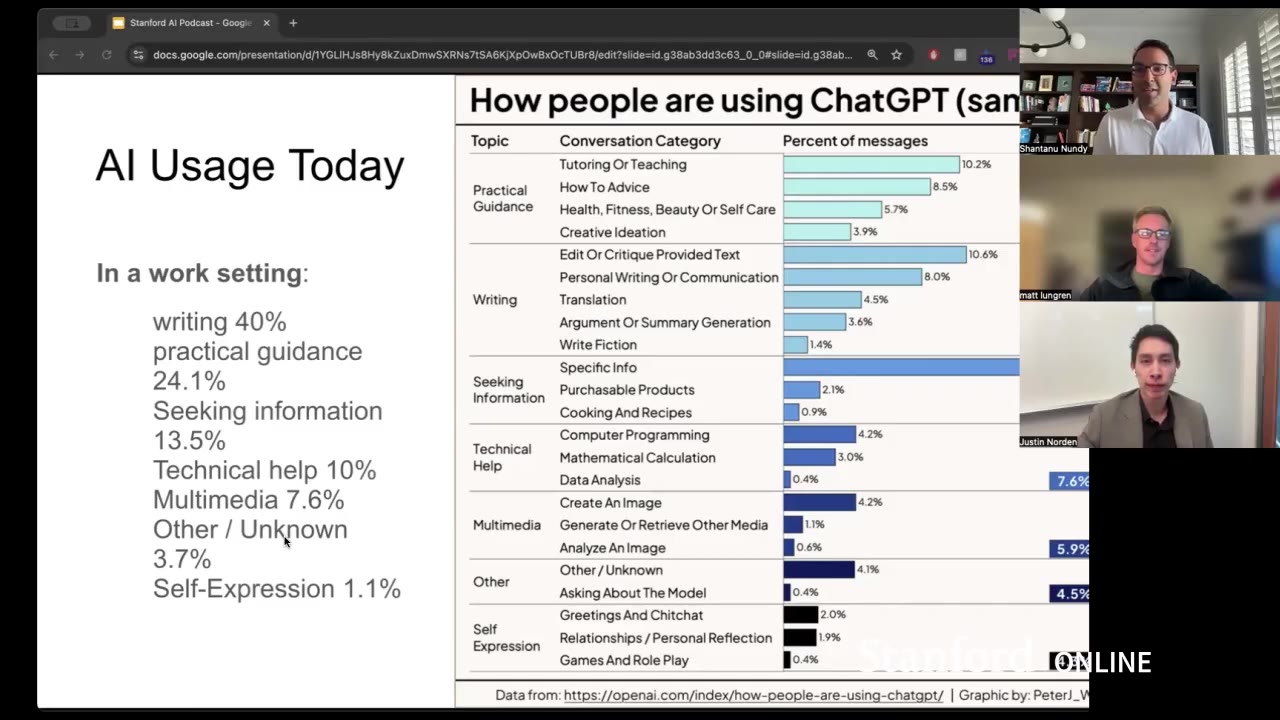
The increasing use of AI for content creation raises concerns about the quality and authenticity of online content. As AI-generated content becomes more prevalent, there's a growing appreciation for original, human-created content. The challenge lies in balancing the benefits of AI-driven content generation with the need for maintaining credibility and avoiding 'AI slop'.
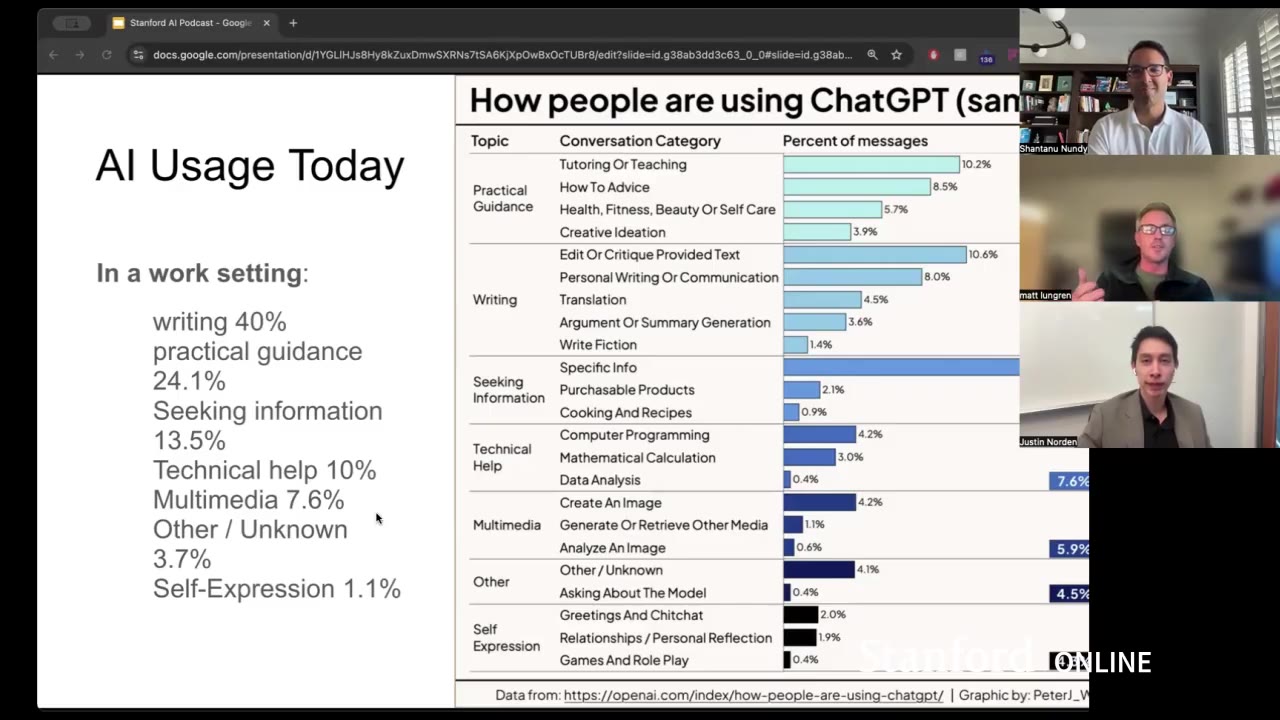
Advancements in video and image generation technologies, such as OpenAI's Sora and Google's Veo, are rapidly progressing. While these technologies offer creative possibilities, they also raise concerns about the potential for misuse, such as creating fake videos of doctors. Content curation and verification are becoming increasingly important in this landscape.

The State of AI report highlights the increasing affordability and accessibility of AI capabilities. Cheaper models are now performing at levels comparable to previous top-tier models. This democratization of AI has significant implications for healthcare, potentially enabling wider adoption and addressing disparities in access.
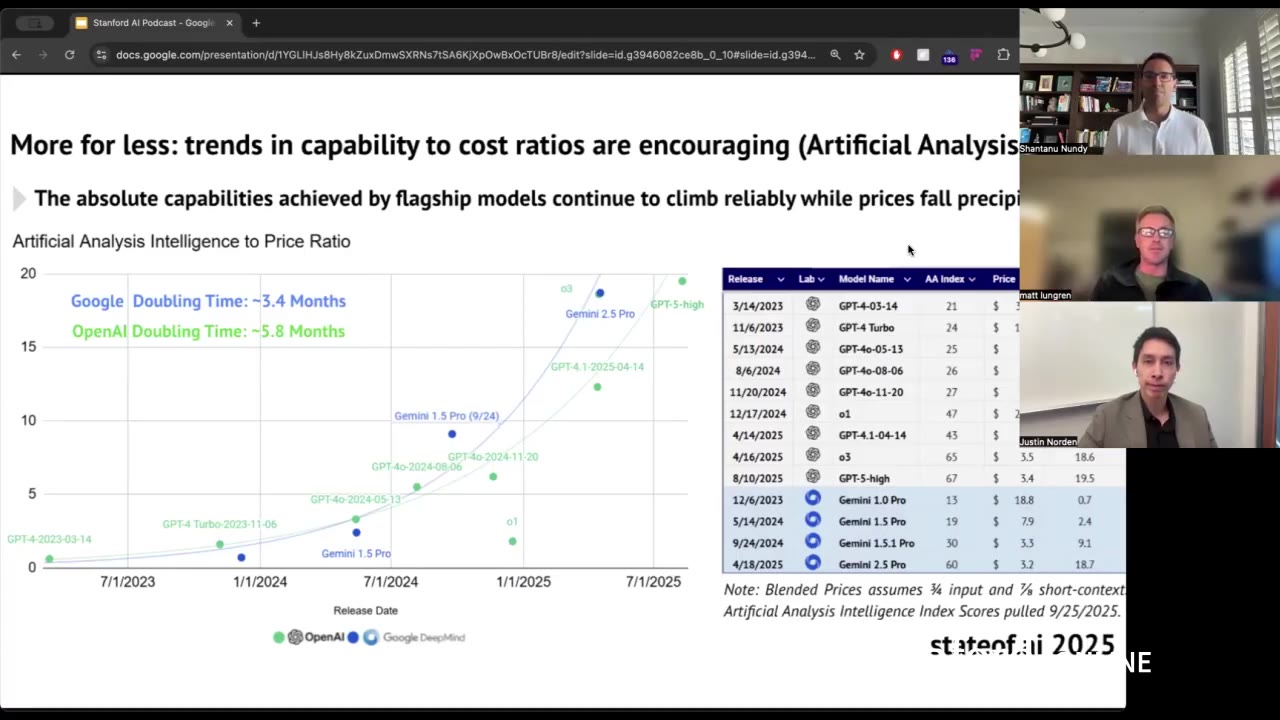
While increased access to AI offers numerous benefits, it also raises concerns about potential problems and unintended consequences. It's crucial to consider the social and technical aspects of AI deployment, including issues such as alert fatigue and the potential for ignoring critical alerts.

A case study involving a patient who died after a sepsis alert was ignored highlights the challenges of integrating AI into clinical workflows. The incident raises questions about alert fatigue, the standard of care, and the potential for unintended consequences, such as turning off alerts to avoid liability.